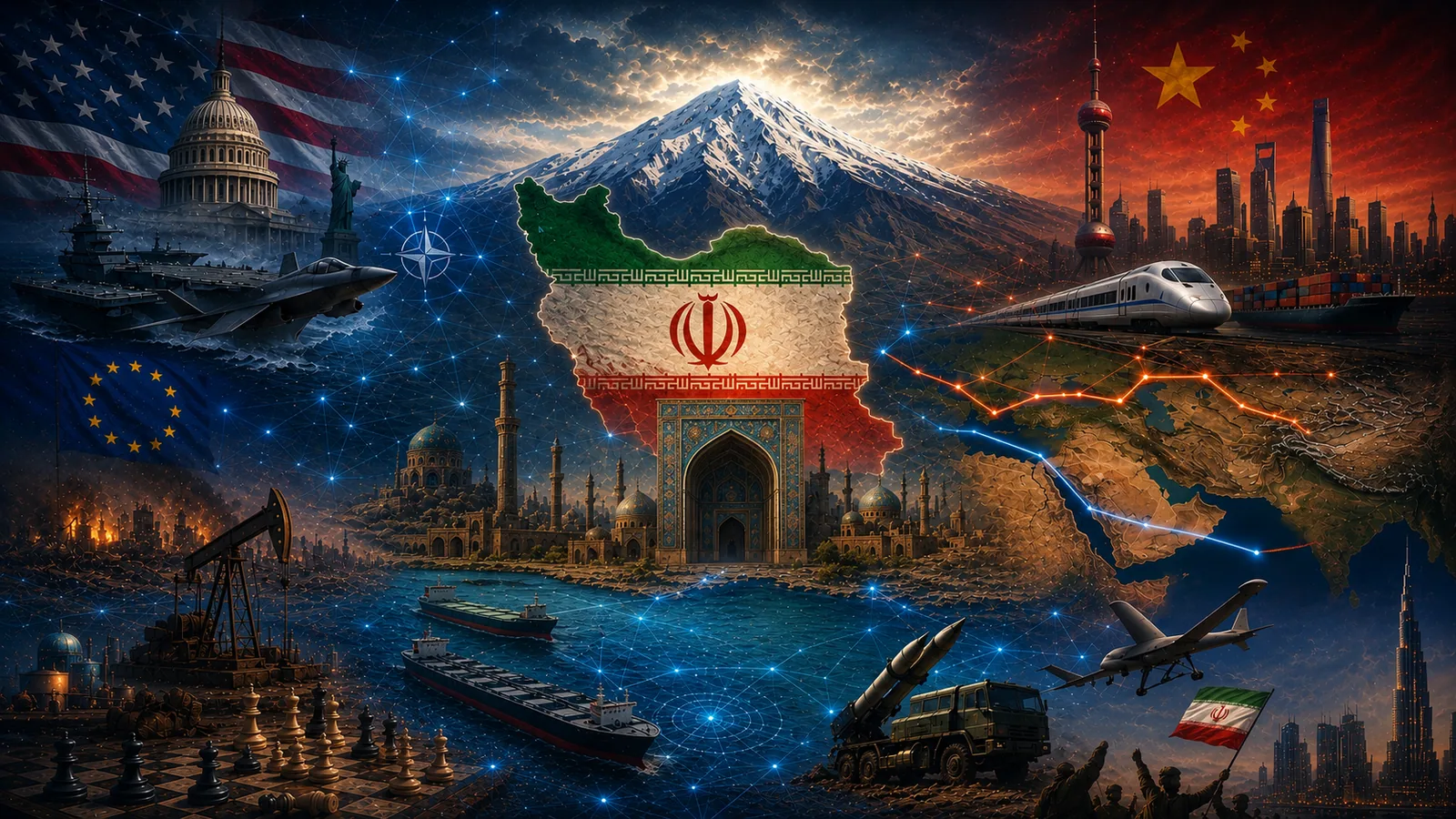
Iran in the Network War: Nodal Civilization, Global Corridors, and the Crisis of American Power Realization
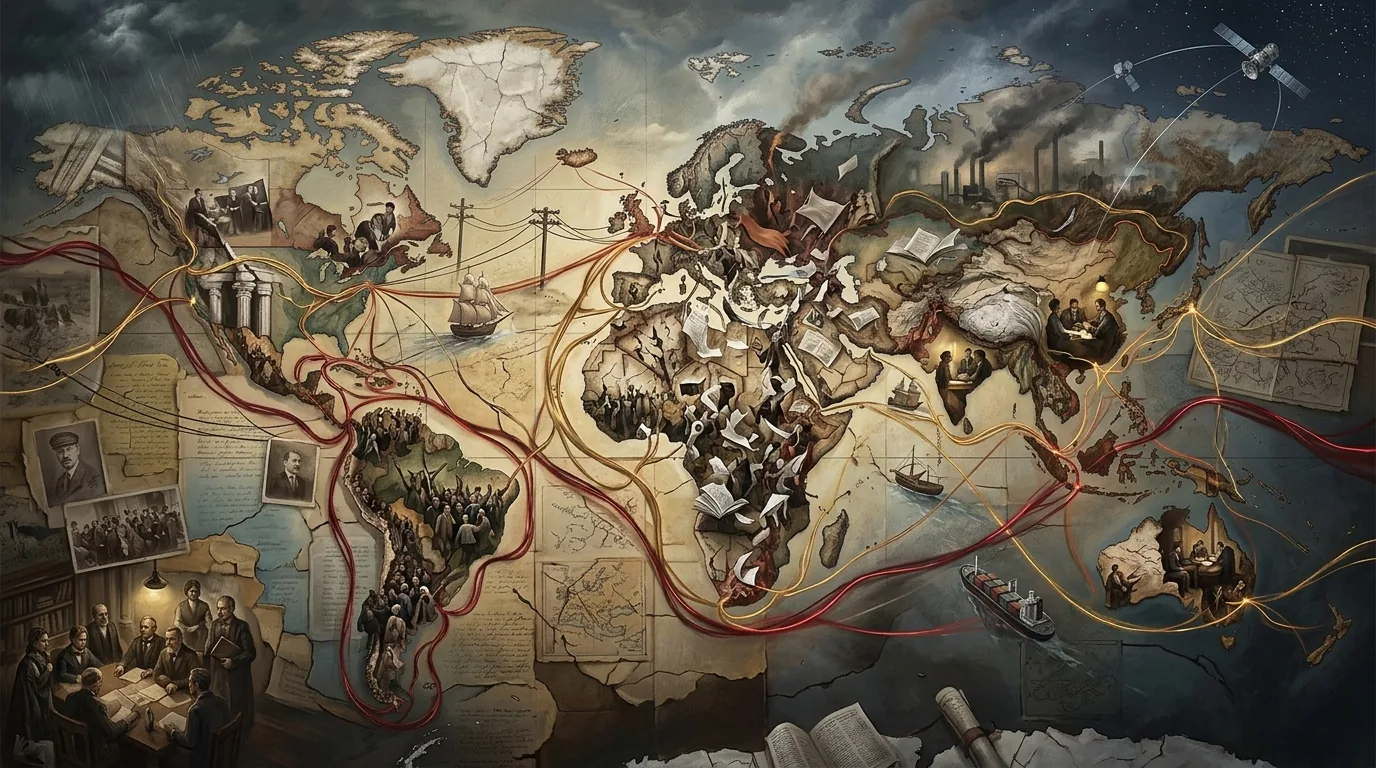
Abstract The contemporary world can no longer be comprehended through the lens of isolated crises. The war in Ukraine, the Iran–U.S. confrontation, the Strait of Hormuz, the Abraham Accords, the India–Middle East–Europe Corridor, China's New Silk Roads, the competition over energy, the pressure on Venezuela, Israel's evolving role in West Asia's security architecture, and the transformation of the political economy of warfare—all are but articulations of a single, integrated field: the battlefield of networks. Within this field, power is no longer reducible to military might, defence budgets, naval fleets, or technological supremacy; rather, it is the capacity to translate instruments into lasting political outcomes. The fundamental crisis of the American-centred order manifests precisely at this juncture: the United States remains a commanding power, yet the gap between its capacity to strike and its capacity to achieve strategic objectives continues to widen. This article argues that Iran must be understood not merely as a regional actor, but as a nodal civilisation—a civilisational formation situated at the confluence of history, language, geography, energy, culture, corridors, the Strait of Hormuz, asymmetric warfare, a knowledge-based society, and indigenous deterrence. Iran may not rival the United States, China, or Russia in classical indices of military power; nonetheless, by virtue of its historical depth and geopolitical position, it can render the realisation of adversarial power impossible, inconclusive, or prohibitively costly. From this vantage, Iran's significance cannot be reduced to its oil and gas, its missiles and drones, or its regional networks; it resides, rather, in its singular capacity to precipitate crisis from one domain into another. It is precisely this interstitial position that makes Iran a pivotal node for comprehending the emergent erosive multipolar order—a world no longer governed by a single centre, but shaped by the distributed capacity to obstruct, fragment, and exact friction upon the exercise of hegemonic will.